CD Genomics is offering platforms for genome-wide epigenomics analysis, each designed to accommodate a wide range of sample types and suit your specific research needs, allowing researchers to look at epigenetic alterations easily. This information will help us not only understand the role of DNA methylation but also identify targets for therapeutic treatment.
What is Epigenetic Modifications
Epigenetic modifications are reversible modifications that affect gene expression without altering the DNA sequence and can be inherited during cell division. Two of the most characterized epigenetic modifications are DNA methylation and chromatin modification. Epigenetic modifications play important roles in gene expression and regulation, and are involved in numerous cellular processes such as in differentiation, development and tumorigenesis. DNA methylation is most frequently observed at the C5 position of cytosine followed by guanine (CpG site) in vertebrates, or non-CpG sites such as CHG and CHH in plants or mammalian embryonic stem cells. DNA methylation is established and maintained by DNA methyltransferases (DNMT1, DNMT3a, and DNMT3b).
Epigenomics can be divided into two main categories:
1. Epigenome: The epigenome encompasses a vast array of chemical modifications occurring on DNA and histones within the chromatin, in addition to structural changes in chromatin itself. These modifications, independent of the underlying genomic sequence, provide critical regulatory information. The following are key components of the epigenome:
(1) DNA Modifications: Includes 5-methylcytosine (5mC) and 5-hydroxymethylcytosine (5hmC).
(2) Histone Modifications: Encompasses modifications such as H3K27me3, H3K4me3, and H3K27ac.
(3) Chromatin Level Changes: Involves alterations mediated by DNA-binding proteins such as transcription factors.
2. Epitranscriptome: This term broadly refers to all post-transcriptional modifications that do not alter the RNA sequence itself. Currently, over 100 different chemical modifications have been identified on RNA, including N6-methyladenosine (m6A), N1-methyladenosine (m1A), and pseudouridine (Ψ).
DNA Methylation Sequencing Technologies
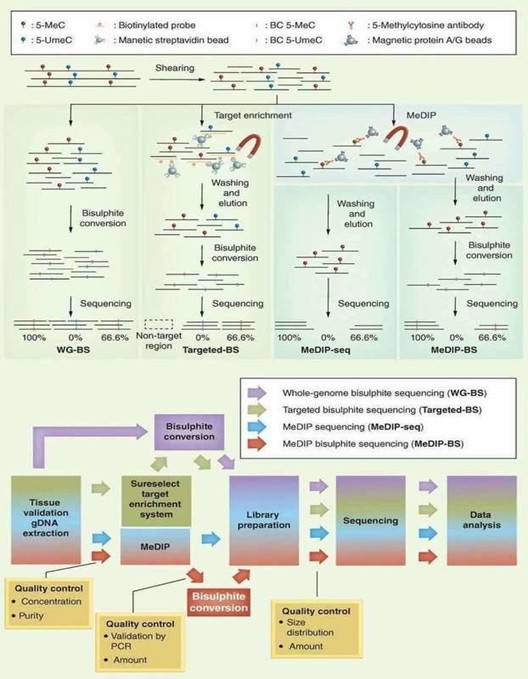
DNA methylation information may be lost during standard molecular biology manipulations, such as molecular cloning in bacteria and PCR, due to lack of maintenance of DNA methyltransferases. Several techniques include methylated DNA immunoprecipitation (MeDIP), bisulfite sequencing (BS-seq), and reduced representation bisulfite sequencing (RRBS) have been proposed to preserve DNA methylation information and simultaneously transform it into quantitative and measurable signals. By combining with high-throughput sequencing, these techniques have provided comprehensive and reliable genome-wide information regarding DNA methylation. A brief outline and workflow of different NGS-based DNA methylation sequencing technologies is shown in below Figure 1.
Figure 1. Different NGS-based DNA methylation analysis methods (Jeong et al., 2016).
In terms of the merit and bias of these methods, BS-seq and RRBS can generate a base-resolution DNA methylome, whereas MeDIP-seq can only generate relative enrichment of specific regions across the genome. Chromatin immunoprecipitation (ChIP) offers an advantageous tool for studying the levels of histone methylation associated with a specific gene promoter region between normal and diseased tissues. Identifying the genetic targets of DNA binding proteins and revealing the mechanism of protein-DNA interaction is crucial for understanding cellular processes. Chromatin immunoprecipitation sequencing (ChIP-seq) allows you to make the most of your chromatin studies with minimal sequencing bias.
Solution
RNA Methylation Analysis: Choosing the Right Method
Download
How to Detect RNA Methylation
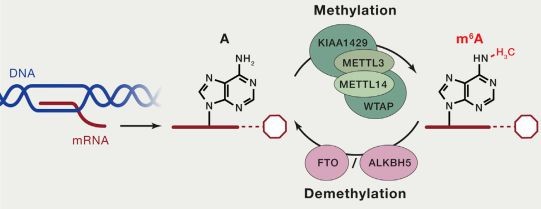
Both DNA and RNA methylation involve the enzymatic addition of a methyl group (CH3) to a specific atom on the DNA or RNA molecule, catalyzed by methyltransferases. In cellular RNA, more than 100 types of chemical modifications have already been identified. Among these, there are various types of RNA methylation, including m6A RNA methylation, m5C RNA methylation, m1A RNA methylation, and m7G RNA methylation. Currently, the most prominent and enriched type is m6A RNA methylation, which refers to the methylation of the nitrogen atom at the 6th position of adenine in RNA molecules (N6-methyladenosine, m6A). This modification stands as the most common post-transcriptional modification in eukaryotic mRNA, accounting for 80% of RNA methylation modifications.
The current methods for detecting RNA methylation primarily include the following:
MeRIP Sequencing (Methylated RNA Immunoprecipitation Sequencing): This method is based on the principle of antibody-specific binding to methylated bases. It uses m6A-specific antibodies to immunoprecipitate and enrich methylated RNA fragments, which are then subjected to high-throughput sequencing to identify m6A modifications. However, this method can only identify regions with high levels of methylation and cannot achieve single-base resolution for RNA methylation.
miCLIP (Methylation Individual Nucleotide Resolution Cross-Linking and Immunoprecipitation): In this technique, methylated RNA is specifically bound to antibodies and then cross-linked with ultraviolet light. The reverse transcription of the cross-linked RNA results in cDNA mutations or truncations, indicating the presence of m6A. While miCLIP can identify RNA methylation at single-base resolution, the high costs associated with using isotopic labels such as P32 make it less feasible for routine laboratory use.
Nanopore Sequencing Technology: This third-generation sequencing technology identifies base sequences based on electrical signals. Different modified bases on RNA cause varying degrees of obstruction as they pass through the nanopore channel, generating characteristic electrical signals. By real-time monitoring of these signals, the corresponding base types and their modifications can be determined. Thus, nanopore sequencing can detect RNA methylation at single-base resolution without the need for specific antibody binding.
Whole Genome Bisulfite Sequencing provides a comprehensive view of DNA methylation patterns across the entire genome, allowing for the examination of methylated and unmethylated cytosines.
This sequencing methodology selectively captures and examines defined genomic regions, facilitating the precise and cost-effective analysis of DNA methylation patterns.
Reduced Representation Bisulfite Sequencing is a method that focuses on a subset of the genome, offering a balance between genome coverage and cost-effectiveness for DNA methylation analysis.
MeDIP Sequencing facilitates the enrichment and analysis of methylated DNA fragments, offering valuable insights into the patterns of DNA methylation and their potential functional implications.
Chromatin Immunoprecipitation Sequencing (ChIP-Seq) is a powerful method for identifying protein-DNA interactions, elucidating transcription factor binding sites, and exploring epigenetic modifications.