Genotyping by Sequencing (GBS)
Home
> Genotyping by Sequencing (GBS)
End-to-End Genotyping by Sequencing (GBS) Service – Scalable SNP Discovery for Complex Genomes
Efficiently genotype hundreds or thousands of samples with our high-throughput GBS (Genotyping by Sequencing) platform—optimized for GWAS, molecular breeding, population genomics, and non-model species. CD Genomics delivers >95% genotyping accuracy, scalable analysis pipelines, and 50% lower cost than traditional SNP arrays.
Accurate genotyping across complex or unknown genomes
GBS is a next-generation sequencing (NGS)–based method that enables genome-wide SNP identification across large populations. It is especially suitable for species with limited genomic information and for projects requiring high-throughput, cost-efficient genotyping.
This technique is widely used in:
Genetic mapping
Population genetics
Marker-assisted selection
Molecular breeding
GBS workflow involves the following steps:
Genome complexity reduction via restriction enzyme digestion
Barcode ligation for multiplexed pooling
Sequencing using Illumina platforms (e.g., NovaSeq)
SNP calling using robust bioinformatics pipelines
Unlike traditional SNP arrays, GBS does not require a reference genome, making it ideal for non-model or understudied organisms.
Why Choose GBS
GBS offers multiple advantages over traditional genotyping methods, making it a go-to choice for high-throughput population studies, breeding programs, and species with limited genomic data.
No Reference Genome Required GBS works seamlessly with non-model organisms and incomplete genomes, reducing the barrier to entry for early-stage studies.
Lower Cost per Sample By focusing on specific genomic regions and reducing sequencing depth, GBS can cut costs by over 50% compared to whole-genome resequencing.
High Throughput for Large Projects Process hundreds to thousands of samples in parallel—ideal for GWAS, QTL mapping, and breeding pipelines.
SNPs in Gene-Rich Regions GBS captures SNPs enriched in coding regions, enabling better trait association and more biologically relevant insights.
Streamlined, Fast Workflow Simple protocol without fragment size selection. Rapid turnaround with minimal library prep time—perfect for tight timelines and limited budgets.
GBS vs Other Genotyping Methods
Feature / Method
GBS
RAD-seq
ddRAD
Whole-Genome Resequencing
Library Prep
Simple, no fragment selection
Complex, size selection required
Dual enzyme cut + size selection
Whole-genome library
Reference Genome Needed
No
No
No
Yes
Input DNA Requirement
Low (≥100 ng)
Moderate
Moderate
High
Cost
Low
Medium
Medium to High
High
Coverage
Gene-rich, wide genome coverage
Near enzyme cut sites
More targeted
Entire genome
Best For
GWAS, breeding, population studies
Structure & diversity studies
Small genomes
Mutation & reference-based analysis
If you're seeking a budget-friendly, scalable, and standardized genotyping solution, GBS is the ideal choice for your next population-scale project.
GBS Service Workflow
End-to-end genotyping—from sample to publication-ready data
Project Start
Project discussion
Technical assessment
Plan confirmation
Sample Reception & QC
Sample registration
DNA quantification
Purity & integrity assessment
Optional: DNA extraction
Library Preparation
Genomic digestion with restriction enzymes
Barcode adaptor ligation
Library construction
Library quality control
High-Throughput Sequencing
Platform: NovaSeq / HiSeq PE150
Insert size: 250–350 bp
Data output:
≥3 Gb/sample for population genetics
≥10 Gb/sample for GWAS
Data Analysis & Delivery
Raw data in FASTQ format
QC report
SNP calling & alignment
Population genetics analysis
Custom bioinformatics solutions
Get Your Instant Quote
Applications of Genotyping-by-Sequencing Across Research and Industry
Crop Breeding:
DNA fingerprinting for variety identification
Mapping of disease-resistant or drought-tolerant genes
Nature Genetics: 42% of population studies in 2023 used GBS data Plant Biotechnology Journal: GBS recommended as a gold standard for marker discovery
Bioinformatics Services for GBS
At CD Genomics, we provide end-to-end GBS bioinformatics services—from rigorous data QC to deep variant discovery. Whether you're decoding complex trait inheritance or making breeding decisions, our analysis pipeline is designed to deliver clarity, accuracy, and reproducibility.
Data Preprocessing & Quality Control:
Adapter trimming and low-quality read filtering
Detection of adapter contamination
Base quality evaluation (Q20/Q30 metrics)
SNP Detection & Alignment:
Read alignment using BWA or Bowtie2
Variant calling using GATK or FreeBayes
SNP/INDEL annotation and summary statistics
Population Genetics (Optional Module):
Principal Component Analysis (PCA)
Population structure (Structure/Admixture)
Phylogenetic tree construction
Genetic distance matrix
Linkage disequilibrium (LD) analysis
Quality Control You Can Trust
ChIP-Seq stands as a fundamental technique in epigenetics and gene regulation research. It is widely used across various fields to uncover gene expression control mechanisms and chromatin function:
Sample integrity check
before library prep
Library QC
for insert size and concentration
Post-sequencing quality assessment
including coverage, read depth, and variant detection metrics
Sample Requirements for GBS
Parameter
Specification
Sample type
Genomic DNA
Recommended input
≥300 ng
Minimum input
≥100 ng
DNA concentration
≥10 ng/μL
Purity (OD260/280)
1.8–2.0
Integrity
No degradation or visible impurities
RNA contamination
Must be removed via RNase treatment
📌 If your samples do not meet the recommended criteria, we also provide DNA extraction services. Please contact us to assess sample suitability or request detailed submission guidelines.
Why Choose CD Genomics for Your GBS Project
95%+ Genotyping Accuracy Achieve high-confidence variant calls at every site—crucial for robust downstream analysis.
High-Throughput Scalability Our pipeline supports thousands of samples in parallel, ideal for large-scale population studies and breeding trials.
Cost-Effective by Design Our optimised GBS protocol reduces per-sample sequencing costs by over 50% compared to whole-genome resequencing.
All-in-One Project Management From DNA to deliverables, we handle the entire workflow—saving your team valuable time and resources.
Flexible Data Analysis Options Get exactly the insights you need with customisable bioinformatics pipelines and modular reporting.
Fast Turnaround & Expert Support Speed meets reliability—our seasoned lab and data teams ensure timely results and expert consultation at every step.
Demo Results
Partial results are shown below:
Distance Tree
PCA Analysis
Heatmap
Phylogenetic Tree
Genotyping by Seq FAQs
1. What is the definition of a GBS Tag?
A GBS Tag refers to a sequence of reads adjacent to a restriction enzyme cut site. The genomic coverage captured by GBS is determined by multiplying the number of Tags by the length of a single read. For instance, utilizing HiSeq 4000 PE150 sequencing, the genomic coverage can be calculated as follows:
GBS captured genomic range=100,000 Tag x 150bp/Tag=100000X150=15 M
If the average sequencing depth per sample is 10x per Tag, the sequencing data volume per sample would be:
15Mx 10=150 M
2. How to select the number of Tags?
The required number of Tags varies depending on the specific research objectives. For example, GWAS might necessitate tens of thousands of high-density molecular markers, whereas studies on phylogenetic relationships or linkage analysis may only require a few hundred to a few thousand molecular markers to achieve satisfactory results. Hence, it is crucial to first evaluate the necessary number of Tags based on the study's requirements and then select an appropriate number of Tags accordingly.
For species with a genome size less than 1 Gb undergoing genetic linkage map studies, a common recommendation is to utilize approximately 100,000 Tags. Adjustments to the number of Tags can be made based on specific research needs.
Table 1. Commonly used GBS Tag numbers (e.g., for genetic linkage maps).
Genome Size
Number of Tags
Below 10G
≥10W tag
1-2G
≥15W tag
2-3G
≥20W tag
3. Can GBS be used for non-reference species?
GBS can indeed be utilized for non-reference species to obtain SNP markers. However, the lack of annotated genomic information in non-reference species presents a significant challenge, often rendering the identification of candidate genes unfeasible. For tasks such as quantitative trait loci (QTL) mapping, association studies, or the mining of genes related to domestication traits, it is advisable to utilize reference species to achieve more accurate and informative results.
4. Can GBS be applied to polyploid species?
GBS technology is applicable to polyploid species. A salient example is the successful application of GBS to hexaploid oat species for genetic mapping in 2014. Polyploid species are characterized by their complex ploidy levels, which can include both autopolyploids and allopolyploids, as well as tetraploids and hexaploids. Each scenario requires specific analytical considerations. Current research efforts have already begun to employ GBS for genetic mapping in polyploid crops such as wheat and cotton.
5. Is GBS suitable for inter-species research?
GBS leverages restriction enzymes for genome capture, thereby facilitating the development of SNP markers needed for genetic linkage and population genetic analyses. Significant genetic divergence between samples can result in non-uniform capture of restriction fragments across samples and a paucity of shared SNPs. Consequently, GBS is predominantly suited for studies at the intra-species level. Nonetheless, in rare cases where there is a close phylogenetic relationship between different species within the same genus and minimal genetic divergence, GBS can be employed effectively for phylogenetic studies.
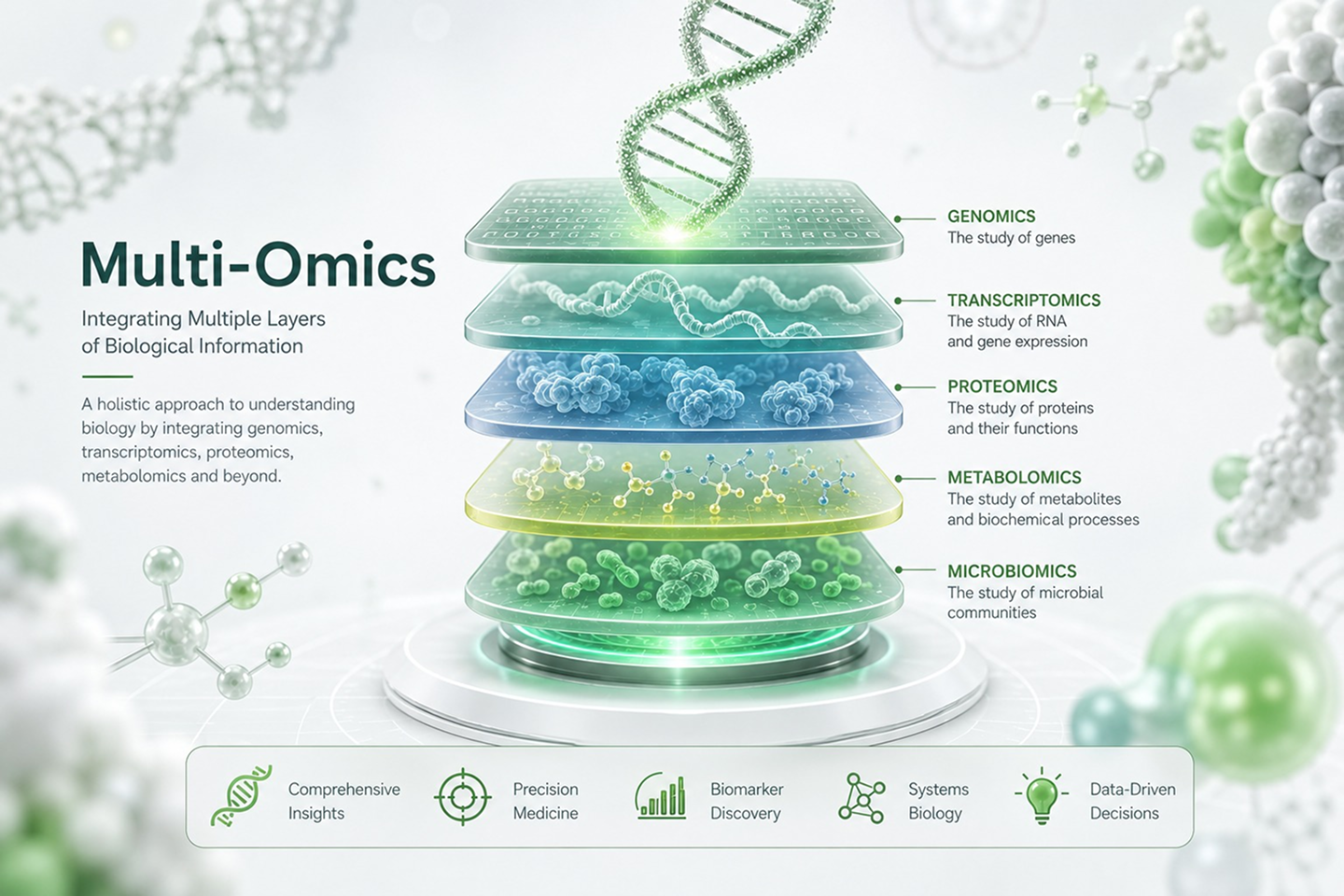
6. Can GBS data be integrated with other omics datasets (e.g., transcriptomics)?
Absolutely. We offer multi-omics integration to help uncover deeper genetic mechanisms.
Available analyses include:
eQTL mapping (requires RNA-seq data)
Epigenetic association studies (integrating DNA methylation or ChIP-seq data)
7. My DNA samples don't meet the recommended input or concentration. Can I still use GBS?
While we recommend ≥300 ng of DNA per sample at a concentration of ≥10 ng/μL for optimal results, we’re flexible.
What to do: Contact our technical team for a quick feasibility assessment.
Need help? We offer in-house DNA extraction services if your sample quantity or quality is suboptimal.
8. Can I request only sequencing data without bioinformatics analysis?
Yes, we offer modular GBS services.
Choose the level of support you need—from library prep and sequencing only, to full bioinformatics analysis.
This flexibility allows you to integrate our services seamlessly into your own research pipeline.
9. Do you support large-scale GBS projects involving thousands of samples?
Yes, we specialise in high-throughput GBS services.
Our automated library prep and advanced sequencing platforms (e.g., NovaSeq) can handle thousands of samples in parallel.
This is ideal for large-scale breeding programs, GWAS, or population genetics studies.
Genotyping by Seq Case Studies
Customer Publication Highlight
Use of biostimulants for water stress mitigation in two durum wheat (Triticum durum Desf.) genotypes with different drought tolerance
Durum wheat (Triticum durum Desf.) is a staple crop in the Mediterranean region, but its productivity is severely threatened by drought stress. Biostimulants have emerged as a promising agronomic strategy to enhance drought tolerance. This study evaluated the efficacy of two biostimulants (B1 and B2) in mitigating water stress effects on two durum wheat genotypes—drought-tolerant Svems16 and drought-sensitive Iride—through physiological, morphological, and genomic analyses.
Project Objective
The research aimed to:
Assess the impact of biostimulants on growth performance under drought stress.
Identify genetic variants associated with drought tolerance using Genotyping-by-Sequencing (GBS).
Elucidate the mechanisms of biostimulant-induced stress mitigation.
CD Genomics' Services
As a leader in genomic solutions, CD Genomics provided:
GBS Analysis: High-throughput sequencing using the NovaSeq platform (5M PE150 reads per sample) to identify SNPs and InDels.
Variant Calling: Alignment to the Svevo.v1 reference genome, quality control, and annotation using GATK and SnpEff.
Functional Profiling: Gene Ontology (GO) enrichment analysis to pinpoint drought-responsive genes and pathways.
Key Findings
1. Biostimulants Mitigate Drought Stress in Sensitive Genotypes
Iride (sensitive): Drought reduced shoot biomass by 25% and root biomass by 29%, but biostimulant application (B1/B2) restored growth by up to 37%.
Svems16 (tolerant): Minimal biomass loss under stress; biostimulants showed limited efficacy, confirming innate tolerance.
2. Genomic Basis of Drought Tolerance
GBS Analysis: Revealed 7,000 shared variants between Iride and Svems16, with distinct missense mutations in dehydrin and histidine kinase genes (e.g., TRITD6Bv1G204160 in Svems16).
GO Enrichment: Svems16 exhibited variants in water deprivation-response genes (e.g., GO:0042631), explaining its superior tolerance.
3. Physiological Adaptations
Stomatal Density: Drought reduced stomata by 15–16%; biostimulants increased density by 26–30% in Iride.
Oxidative Stress: MDA (lipid peroxidation marker) spiked in Iride under drought (+165% in roots), but biostimulants partially alleviated oxidative damage.
4. Root Architecture Modulation
Biostimulants induced thicker, shorter roots in control plants. Under drought, Iride developed longer roots with more tips, while Svems16 maintained stable morphology.
Figures Referenced
Figure 7: Genomic variant distribution and GO enrichment highlights drought-responsive genes in Svems16
Figure 5: Stomatal density changes under biostimulant and drought treatments.
Implications
This study demonstrates that biostimulants can effectively mitigate drought stress in sensitive durum wheat cultivars by modulating root morphology and stomatal density. CD Genomics' GBS analysis provided critical insights into the genetic basis of drought tolerance, enabling targeted breeding strategies. The findings support the use of biostimulants as a sustainable tool to enhance crop resilience in water-limited environments.
CD Genomics' Contribution: By delivering high-resolution genomic data and variant annotation, CD Genomics enabled the identification of key genetic markers for drought tolerance, paving the way for precision agriculture in cereal crops.
Reference
Spada, Matteo, et al. "Use of biostimulants for water stress mitigation in two durum wheat (Triticum durum Desf.) genotypes with different drought tolerance." Plant Stress 14 (2024): 100566. https://doi.org/10.1016/j.stress.2024.100566