CD Genomics provides a fully flexible genotyping service for small, large, standard or customized projects, on humans and many other species. Our powerful portfolio includes arrays, reagents, instruments and bioinformatics tools that enable you to detect common and rare single nucleotide polymorphisms (SNPs), copy number variations (CNVs) and other genetic variations. CD Genomics genotyping services accommodate projects with a broad range of applications. With more than 10 years of service experience, we offer a highly trusted, flexible and competent service combined with high industry standards and scalable capacity, and we have been recognized as the premium choice of SNP genotyping.
What is Genotyping
Genotyping serves as a scientific process by which the particular alleles located at given gene sites within an organism's genome are identified and described. In the realm of biological research, the fundamental purpose of genotyping is to ascertain the types of unique alleles harboured by an organism at designated gene loci. This practice aids in unveiling the correlation between genotype and phenotype, and the influence of genetic variations on an organism's traits and phenotypic expression. Genotyping uncovers genetic disparity by comparing a DNA sequence with another sample or a reference sequence. This technique facilitates the detection of subtle alterations in a population's gene sequences, like single nucleotide polymorphisms (SNPs).
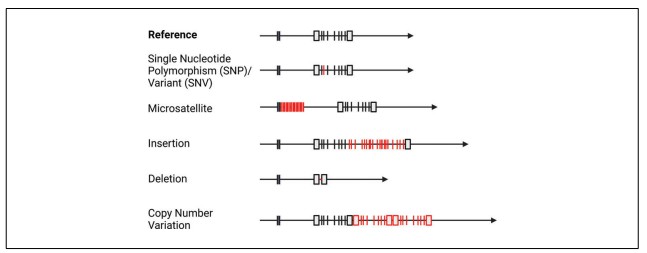
Single Nucleotide Polymorphisms (SNPs) are bi-allelic (usually) nucleotide variants that have been found throughout the genome at a frequency of about one in 1,000 bp. They can be found in coding, non-coding, and intronic regions of genomes, and they may affect transcription factor binding, gene splicing, protein folding, and many other elements at the gene and transcript level. Hence they may be responsible for the diversity among individuals and genome evolution, and are ideal markers for identifying genes associated with complex diseases. SNPs are one of the two most common sources of genetic variation (the second one are copy number variants, CNVs). SNP analysis is important and quite meaningful for studies such as disease related genetics, individualized health management, breeding, etc.
On the basis of the purposes of the study, SNP genotyping can be divided into two domains, whole genome genotyping and fine mapping. Whole genome genotyping is a platform for screening SNPs. Fine mapping here is defined as SNP genotyping analysis at a high density for selective genomic regions. Fine mapping often follows large-scale genome-wide studies to zoom into potential genes associated with the disease of interest, and requires the validation of fewer (e.g., fewer than 1,000) SNPs highly specific for each disease for a larger sample size, it should achieve a high call rate for all selected SNPs, without time-consuming assay optimization processes, and at a relatively high multiplex level.
A key issue in high-throughput genotyping is to choose the appropriate technology for your goals and for the stage of your experiment. CD genomics offers researchers the flexibility to profile samples with thousands to millions of markers in high-throughput format, and deliver dense genome-wide coverage with the most up-to-date content available from the scientific community.
Figure 1. Types of genetic variants. (Kockum et al., 2023)
What are the Genotyping Method
Genotyping is a complex procedure that employs diverse techniques to dissect and characterize distinct genetic loci within an individual's genome. Here is an exhaustive synopsis of the constituent methodologies that make this process possible:
Preparation of DNA:
Extraction of genomic DNA involves isolating chromosomal DNA from the nuclei of cells through the use of detergents and mechanical shearing. This is followed by the removal of proteins and cellular debris to acquire purified DNA. Extraction methods can be organic in nature, or they might utilize commercial kits harnessing filter columns or magnetic beads, processing biological samples like blood, saliva, or paraffin-embedded biopsy materials.
Hybridization:
Genotyping methods such as PCR, microarrays, and NGS leverage hybridization, a process involving the pairing of complementary single-stranded DNA fragments to create double-stranded molecules, relying on base pair matching across these fragments, is fundamental.
PCR-Based Techniques:
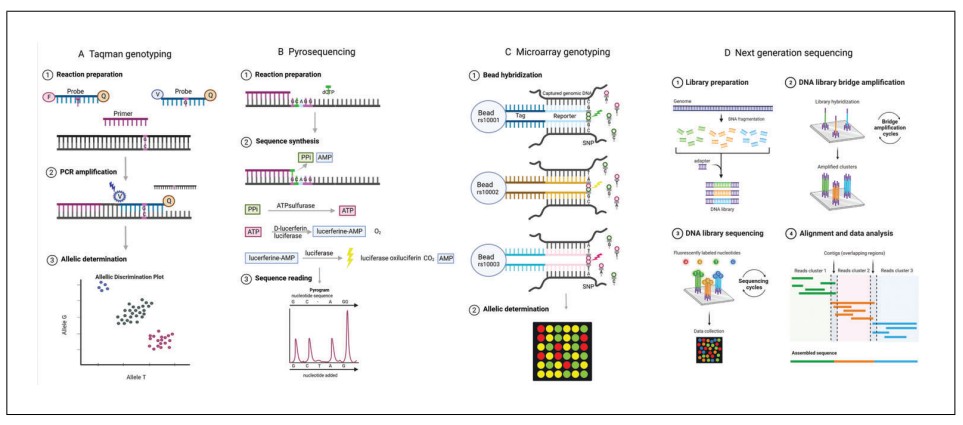
Polymerase Chain Reaction (PCR) facilitates the rapid amplification of specific DNA sequences, which aids in automated genotyping. Techniques like allele-specific PCR and PCR-RFLP are widely used in genotyping for the detection of specific alleles or distinguishing between alleles based on the patterns of restriction enzyme digestion. TaqMan PCR, known for its use of allele-specific probes with fluorescent labels, is prevalent for genotyping candidate SNPs.
iPLEX:
The iPLEX methodology is based on Sequenom MassARRAY technology. It uses locus-specific primers and mass-modified dideoxynucleotide terminators for genotyping, which are detected with MALDI-TOF mass spectrometry.
Pyrosequencing:
Pyrosequencing is employed for short DNA fragments. It involves the synthesis of novel DNA strands one nucleotide at a time, with light emission with each nucleotide incorporation, facilitating genotyping analysis.
Microarray Techniques:
Microarrays, such as Affymetrix GeneChip and Illumina bead arrays, are a key part of broad-scale genotyping. They are based on the hybridization of DNA fragments to artificially synthesized DNA spots containing SNP sequences. Signal detection following this hybridization aids in genotype determination.
Next-Generation Sequencing (NGS):
NGS platforms enable massively parallel sequencing of DNA fragments and enable high-throughput genotyping. This process incorporates a multitude of steps including sample preparation, cluster generation, sequencing-by-synthesis, and data analysis. It allows the identification and detection of novel polymorphisms and mutations. Within genotyping, the differences in DNA sequences across samples at the same locus are identified. Furthermore, in the case of the sample being RNA, NGS can quantify gene expression. The distinct edge of this methodology for genotyping is its capacity to identify novel polymorphisms/mutations, a capability that outshines other genotyping methods such as microarray.
Figure 2. Selected genotyping methods. (Kockum et al., 2023)
Our Genotyping services
We offer different genotyping technologies depending on the application and species, the purpose of the analysis, the number of SNPs per sample (from just a few up to five million) and the number of samples in the study. Our comprehensive SNP genotyping services include both whole genome wide assay for SNP screening and fine mapping assay for validation of SNPs based on 5 platforms—Affymetrix, Illumina, Sequenom MassARRAY, ABI TaqMan, and ABI 3730XL:
Whole Genome SNP Genotyping
SNP Fine Mapping
CNV Genotyping
DNA Fragment Service
Sample requirements
Service
Sample Type
Recommended Quantity
Minimum Quantity
Minimum Concentration
GBS/ddRAD
Genomic DNA
≥ 300 ng
100 ng
10 ng/µL
2b-RAD
Genomic DNA
≥ 200 ng
50 ng
5 ng/µL
SNP Microarray
Genomic DNA
≥ 300 ng
100 ng
8 ng/µL
SSR Genotyping
Genomic DNA
≥ 500 ng
200 ng
10 ng/µL
Analysis Pipeline
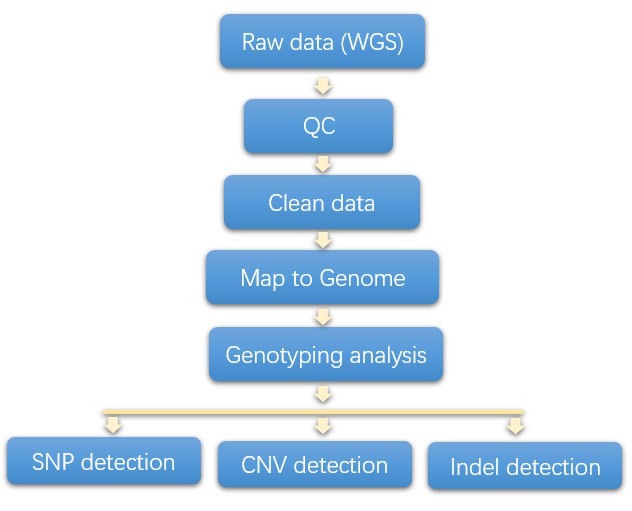
The fundamental input data can comprise diverse types of microarray chip data and next-generation sequencing data such as whole genome sequencing or whole exome sequencing data. Ordinarily, genotyping results from microarray chip data are furnished by the chip manufacturer. The subsequent pipeline delineates the systematic approach to analyzing genotyping by utilizing whole genome sequencing data.
Advantages of Our Genotyping Services
Rigorous adherence to stringent standards ensures the delivery of comprehensive genotyping solutions.
Expertise across various facets of genotyping, including assay design, sample processing, and data analysis, guaranteeing accurate and insightful results.
Swift turnaround time coupled with unwavering accuracy and reliability make our genotyping services both efficient and dependable.
Versatility to handle diverse sample types, spanning human, animal, plant, and microbial genomes, underscores our capability to address a broad spectrum of research needs.
Commitment to advancing genomics research by offering access to cutting-edge genotyping technologies and methodologies.
Tailored services tailored to suit the unique requirements of each project, ensuring a personalized and effective approach to genotyping analysis.
Consultative approach to identify optimal and cost-effective solutions, empowering researchers to achieve their specific research objectives with maximum efficiency.
Our service package includes:
Scalable platform. CD Genomics is able to perform an effective analysis on small to large samples due to its variety of SNP genotyping platforms.
Quality assurance. Through our strict QC process, we only provide data of high resolution and high quality for the utmost reliability.
Experiment design. Selection of SNP fit for research purpose, and then a selection of platform based on the number of samples and design possibility.
Genotyping. Validation of the existence and frequency of known SNPs and discovery or novel SNPs.
Data. Provided in Excel format. For SNP discovery, raw data, annotation, LD results are also provided.
Results Display
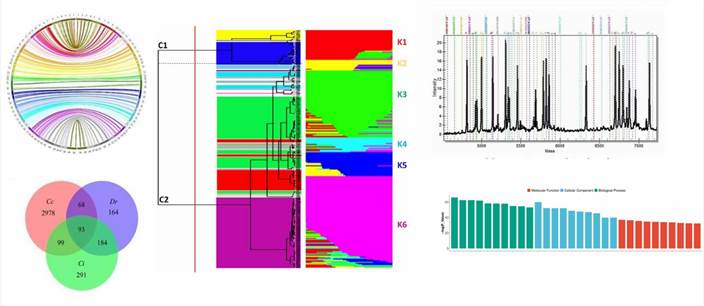
The application of bioinformatics approaches to the analysis of SNP genotyping and Copy Number Variations (CNVs) allows for the examination of results from millions of markers and probes, the detection of outlier samples, and the prediction of functional consequences of genetic variations. Presented below are graphical representations of the outputs generated using assorted genotyping techniques.
We aim to provide the highest level of service, confidentiality and customer support. Our extensive expertise can help expedite your SNP and mutation analysis assays with speed, quality, and reliability. With our services you can either take a deep look into the genome or search for unknown genotype-phenotype connections or genotype already known variations.