Ultra-Low RNA Sequencing
Home
> Ultra-Low RNA Sequencing
The Introduction of Ultra-Low RNA Sequencing
We offer ultra-low input RNA sequencing service allows the study of samples with a limited number of cells or with the ultra low amount of input RNA. Ultra low input RNA sequencing enables researchers to explore the true diversity of gene expression within small cell populations in complex tissues and understand cellular subpopulation responses to environmental cues. It provides a powerful new tool for the analysis of exceptionally rare or precious samples—including stem cells, circulating tumor cells, and brain tissue biopsies.
CD genomics makes the widest possible use of industry-proven technology to generate high-quality cDNA with ultra-low levels of RNA, combined with Illumina sequencing, to provide a powerful new tool for the analysis of these exceedingly limited samples. We provide several different services for obtaining an accurate portrait of expression levels for coding and noncoding RNAs from small sample inputs.
Starting from picogram quantities of RNA or a few hundreds of cells, current technology offers unparalleled sensitivity and unbiased amplification of cDNA transcripts, enriching for full-length transcripts and maintains the true representation of the original mRNA transcripts.
While NGS technology has contributed greatly to our understanding of cellular mRNA, it has also revealed the existence of a vast assortment of noncoding RNAs that play diverse roles in processes such as gene expression regulation. Ultra low input total RNA sequencing allows delivering data including both mRNA and lncRNA, enabling the analysis of this important class of regulatory RNAs.
We also provide ultra low input small RNA service, which works directly with total RNA or enriched small RNA inputs ranging from nanogram quantities of RNA. It allows researchers to analyze a wide range of smRNA species and generate sequencing libraries of considerable complexity from as little as 1 ng of input material, ensuring that diverse smRNA species are represented with minimal bias.
Advantages and Features of Ultra-Low RNA Sequencing
Sample to data solution with the highest data quality and lower cost
Accurate gene quantification, and unparalleled sensitivity for ultra-low RNA input
Powerful analysis of gene expression levels and alternatively spliced isoforms, characterization of small RNA, and gene discovery
The ultra-low input RNA sequencing method aims to minimize amplification biases while preserving the representation of RNA species present in the original sample. By optimizing the steps of reverse transcription and PCR amplification, artificial artifacts are minimized, ensuring a comprehensive understanding of the transcriptome.
Ultra-Low RNA Sequencing Workflow
Our comprehensive ultra low RNA sequencing services provide the RNA sequencing workflow from sample preparation through data analysis, enable rapid profiling and deep insight of the RNA.
Data Analysis We provide multiple customized bioinformatics analyses:
Differential gene-expression analysis
RNA structure analysis
Target gene prediction and functional analysis
Detecting novel and rare transcripts and mutations
Novel transcript prediction
PCA plot, heatmap, pathway analysis
Note: Recommended data outputs and analysis contents displayed are for reference only. For detailed information, please contact us with your customized requests.
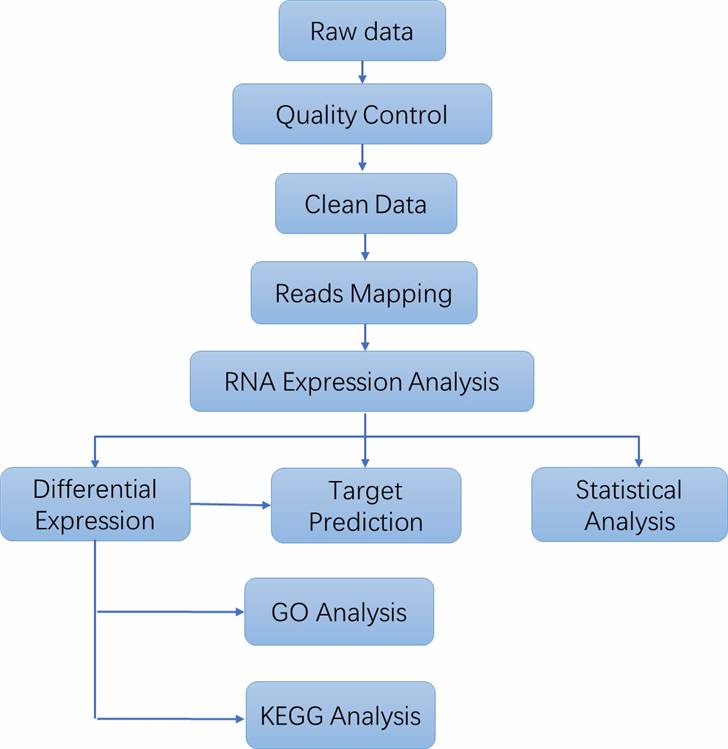
Analysis Pipeline
Deliverables
The original sequencing data
Experimental results
Data analysis report
Details in Ultra Low RNA Sequencing for your writing (customization)
Leveraging our team of seasoned experts and state-of-the-art technology, CD Genomics offers a specialized Ultra Low RNA Sequencing service. Our platform delivers high-resolution RNA sequence data through rigorous quality assurance and advanced bioinformatics analyses, ensuring unparalleled accuracy and sensitivity.
Demo Results
Partial results are shown below:
Sequencing quality distribution
A/T/G/C Distribution
IGV Browser Interface
Correlation Analysis Between Samples
PCA Score Plot
Venn Diagram
SMART-seq FAQs
1. What is Ultra Low RNA Sequencing?
Ultra Low RNA Sequencing (ULRS) represents a state-of-the-art technology designed to produce highly accurate sequencing data from minuscule quantities of RNA samples. This method is strategically positioned to address complex biological inquiries, such as single-cell RNA sequencing (scRNA-seq), the analysis of rare cell populations, and the profiling of RNA extracted from clinical specimens.
2. What are the applications of Ultra Low Input RNA Sequencing?
Ultra Low Input RNA Sequencing is pivotal across multiple domains: it enables scRNA-seq to probe cellular transcriptomes, identifies rare cell types, and extracts RNA from clinical samples for diagnostic insights. In developmental biology and stem cell research, ULRS elucidates gene expression dynamics, offering nuanced RNA profiling in diverse biological contexts, thus advancing scientific understanding.
3. What are the requirements for samples in Ultra Low RNA Sequencing?
In Ultra Low RNA Sequencing (ULRS), the integrity of samples stands as a critical factor to avert RNA deterioration, mandating inputs of top-notch RNA quality. The method's sensitivity to minute RNA quantities highlights the compatibility of samples ranging from picograms to nanograms. Maintaining sample purity serves as a pivotal safeguard against contaminants that may distort sequencing outcomes.
4. What should be considered in data analysis for Ultra Low RNA Sequencing?
During data analysis in Ultra Low RNA Sequencing, meticulous data preprocessing becomes imperative to validate quality and minimize noise for heightened precision in subsequent analyses. Evaluation of gene expression levels hones in on accurate quantification, while a deep dive into functional annotation aids in unraveling the biological significance of differentially expressed genes. Integration analysis further augments insights by amalgamating RNA sequencing data with other omics datasets, thereby providing a comprehensive understanding of biological mechanisms.