As a leading provider of NGS services, CD Genomics is providing an integrated portfolio of methylation sequencing services. Whole genome bisulfite sequencing (WGBS) is an effective and reliable strategy to identify individually methylated cytosines on a genome-wide scale. With over 10 years of experience and the state-of-the-art next-generation sequencing platforms, we can totally meet your project requirements and budgets in the exploration of methylome.
What Is Whole Genome Bisulfite Sequencing
In mammalian biology, 5-methylcytosine involves a covalent linkage between a methyl group and the 5' carbon position of cytosine, therein bestowing additional capacitive traits for signal transduction and regulatory functionality. As one of the predominant epigenetic modifications, 5-methylcytosine plays a pivotal role in numerous biological processes, including gene silencing, transposon repression, the inhibition of repetitive sequences, genomic imprinting, and X-chromosome inactivation. The detection and quantification of methylation are fundamentally critical for comprehending gene expression and other processes subjected to epigenetic regulation.
DNA methylation constitutes a vital part of epigenetics, playing an integral role in maintaining normal cellular functions, genetic imprinting, embryonic development, and the onset of human tumorigenesis. WGBS employing a bisulfite conversion of unmodified cytosines to uracils in genomic DNA, allows the generation of a comprehensive methylation profile. By performing a high-throughput resequencing of the converted DNA and comparing it with a reference genome, the WGBS method enables a genome-wide analysis of methylation metrics at single-base resolution, offering high precision. Its broader application spans from probing the fundamental mechanics of cellular differentiation and tissue development to advancing fields of agricultural breeding, human health, and disease treatment.
WGBS is the method of choice for drawing comprehensive maps of DNA methylation at the individual base level. This approach, often referred to as the "gold standard" for methylation sequencing, stands out due to its high throughput, time-efficiency, single-base resolution, and extensive coverage.
Principle of WGBS
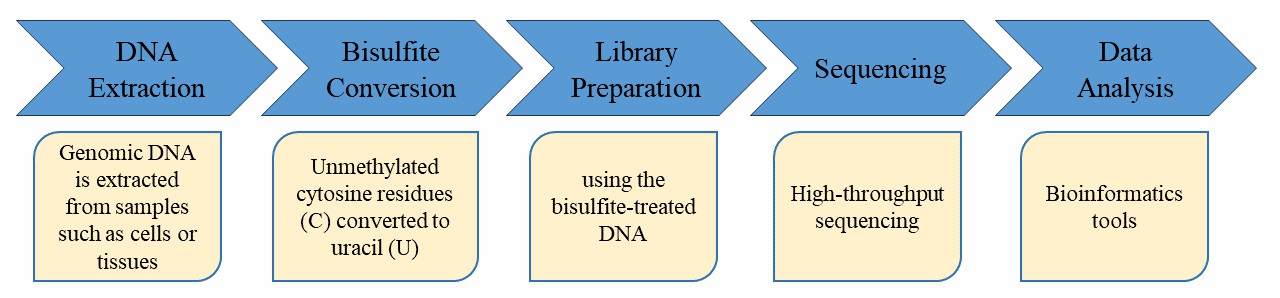
The principle of WGBS relies on the treatment with heavy bisulfate to convert un-methylated cytosines in the genome into uracils, which become thymines after PCR amplification and can thus be distinguished from methylated cytosines. Coupled with high-throughput sequencing technology and referencing sequence comparison, methylation at CpG/CHG/CHH sites can be determined, making it particularly suitable for constructing single-base resolution whole-genome DNA methylation maps. For further detailed information, please refer to the article, "Principles and Workflow of Whole Genome Bisulfite Sequencing".
Advantages of WGBS
Suitable for research on humans and most animals and plants (with known reference genomes).
Highly integrated single-base resolution DNA methylation patterns.
This technology scans and detects approximately 450K and 850K important CpG sites known in the genome through chip scanning. It exhibits high accuracy and repeatability, but it is limited to human samples and cannot detect new CpG sites outside of the chip on the genome.
MeDIP-seq
Methylated DNA immunoprecipitation sequencing (MeDIP-seq) enriches and sequences regions undergoing methylation, obtaining the methylation status of most methylated regions across the entire genome. It lacks single-base resolution and absolute quantification of methylation levels, only providing relative methylation levels. It is suitable for exploring the genome-wide methylation status without the need for single-base resolution.
WGBS
This technique can detect effective CpG sites reaching over 75% of all CpG sites in the entire genome, achieving single-base resolution. It is suitable for systematically and comprehensively studying the genome-wide methylation status.
RRBS
Reduced representation bisulfite sequencing (RRBS) detects the methylation status of regions rich in CG-type sites (mainly regulatory regions) in the genome, with single-base resolution and high cost-effectiveness. It is suitable for studying the methylation status of regulatory regions.
Target-BS
Target bisulfite sequencing designs primers for target fragments, performs PCR amplification after BS conversion, and finally constructs libraries for next-generation sequencing. The sequencing depth of target region sequencing can reach from hundreds to tens of thousands, enabling precise detection of methylation levels at C sites within target regions. It is used for subsequent methylation verification of target genes.
DNA Methylation Microarray
The Illumina 935K DNA Methylation Assay Service is a sophisticated tool designed for the exploration of DNA methylation. The Infinium MethylationEPIC v2.0 BeadChip (935K) facilitates high-throughput scrutiny of roughly 935,000 CpG locations dispersed throughout the human genome. This upgraded version proffers enhanced coverage and precision, ensuring congruence with the most recent genomic databases. Notable attributes of this device comprise whole-genome investigation capabilities, confirmed dependability, and broad compatibility with diverse specimen categories, encompassing formalin-fixed, paraffin-embedded tissues. The service caters specifically to comprehensive epigenetic study, providing researchers with the means to decode underlying disease mechanisms and pinpoint potential biomarkers. The Illumina Methylation Screening Array 270K (MSA270K) represents a cutting-edge innovation tailored for meticulous methylation examinations specifically conducted within distinct disease cohorts and expansive health evaluations. Encompassing roughly 270,000 methylation loci, this tool delivers improved efficiency by allowing a throughput of 48 samples per array, constituting a sixfold increase compared to its antecedent. Empowering scientists in making strides in exploratory endeavors related to disease phenotypic patterns, environmental bearings on epigenetics, and alterations in methylation tied to aging, the MSA270K significantly bolsters our comprehension of DNA methylation and its consequential effects on human health and disease conditions. This catalyzes paradigm shifts in the fundamental understanding of our innate genetic blueprint, unlocking potential future therapeutic avenues.
WGBS Workflow
Our highly experienced expert team and strict quality control following every procedure ensure the comprehensive and accurate results. Before high-throughput sequencing, the DNA sample is processed with cytosine bisulfite conversion followed by tagging at 5' and 3' ends, and the introduction of Illumina adapters by PCR amplification.
In order to ensure the accuracy and reliability of sequencing data, CD Genomics meticulously executes each experimental step from DNA sampling to the acquisition of the final data report, through stringent quality control assessments. This comprehensive approach fundamentally guarantees high-quality data output. Securing high-quality data is the cornerstone prerequisite for accurate, comprehensive, and credible bioinformatics analysis.
Service Specification
Sample requirements and preparation
Samples sources including human, animals, plants and microorganisms
Sample preparation protocol probably including genomic DNA extraction, purification, quantification, QC, etc.
Sequencing
HiSeq platforms, paired-end 150 bp
More than 80% of bases with a ≥Q30 quality score
Sequencing depth > 20X
Data Analysis We provide multiple customized bioinformatics analyses:
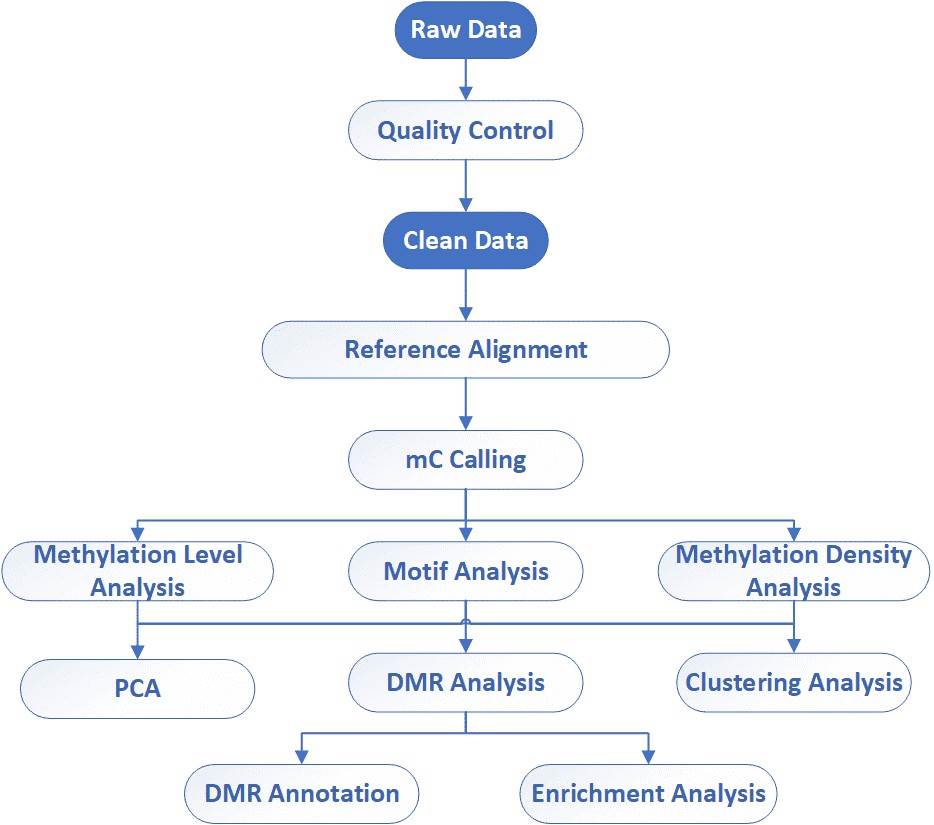
Alignment against reference genome
Sequence depth and coverage analysis
mC calling
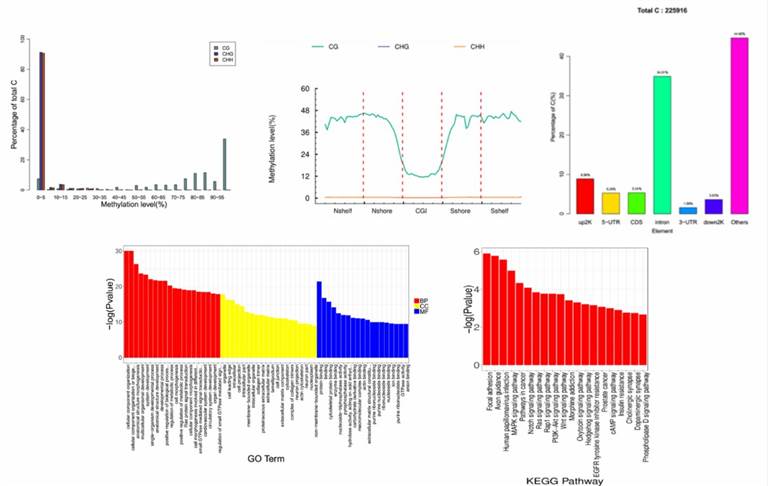
Methylation level analysis
Global trends of methylome
Methylation density analysis
Differentially Methylated Regions (DMRs) analysis
DMR annotation and enrichment analysis (GO/KEGG)
Clustering analysis
Analysis Pipeline
Deliverables
The original sequencing data
Experimental results
Data analysis report
Details in WGBS for your writing (customization)
Benefiting from the cutting-edge next-generation sequencing platforms and rich experience, we guarantee you high-quality data and integrated bioinformatics analyses. If you are interested in what CD Genomics can do with the whole genome bisulfite sequencing, please do not hesitate to contact us. We look forward to moving your project forward.
References:
Huang, K., & Fan, G. DNA methylation in cell differentiation and reprogramming: an emerging systematic view. Regenerative medicine, 2010, 5(4), 531-544.
Beck D, Ben Maamar M, Skinner M K. Genome-wide CpG density and DNA methylation analysis method (MeDIP, RRBS, and WGBS) comparisons. Epigenetics, 2022, 17(5): 518-530.
Abante J, Fang Y, Feinberg A P, et al. Detection of haplotype-dependent allele-specific DNA methylation in WGBS data. Nature communications, 2020, 11(1): 5238.
Suzuki M, Liao W, Wos F, et al. Whole-genome bisulfite sequencing with improved accuracy and cost. Genome research, 2018, 28(9): 1364-1371.
Demo Results
Whole Genome Bisulfite Seq FAQs
1. What species are suited for whole genome bisulfite sequencing?
The species subjected to genome bisulfite sequencing should meet the following three conditions:
a. Eukaryotes. b. Its reference genome has been assembled to the scaffold level at least. c. Relatively complete genome annotations.
2. What are the main contents of advanced bioinformatics analysis in WGBS?
Analysis of the correlation between methylation levels and transcriptional levels constitutes a major component of advanced bioinformatics analysis in whole-genome methylation sequencing. It primarily encompasses four aspects:
Methylation levels of differentially expressed genes.
Methylation levels of differentially expressed transposable elements.
Relationship between methylation modifications and expression regulation.
Expression analysis of methylated and non-methylated genes.
3. What are the advantages of WGBS compared to other methylation sequencing methods?
In the field of DNA methylation sequencing, current primary methodologies include Whole Genome Bisulfite Sequencing (WGBS), Methylated DNA Immunoprecipitation (MeDIP), and Reduced Representation Bisulfite Sequencing (RRBS). WGBS boasts the advantage of allowing the evaluation of methylation status at nearly every CpG site. This assessement can extend to areas of low CpG density, including intergenic "gene deserts", partially methylated domains, and distant regulatory elements. Furthermore, WGBS can reveal absolute DNA methylation levels and the methylation sequence context. However, it should be noted that MeDIP cannot achieve single-base resolution of methylation, and RRBS typically selects areas with a higher degree of methylation for analysis, which precludes obtaining methylation status at the whole-gene level.
4. What are the limitations of WGBS?
This method can only detect 5mC or 4mC and is unable to detect 6mA.
Treatment with bisulfite leads to significant fragmentation of DNA, which can impact amplification.
The conversion of unmethylated cytosines to uracils during bisulfite treatment increases the complexity of library preparation. Incomplete conversion may also introduce bias into the results.
The method is unable to effectively distinguish between 5mC and 5hmC.