Multi-Omics Analysis for Biomarkers, Networks, and Discovery
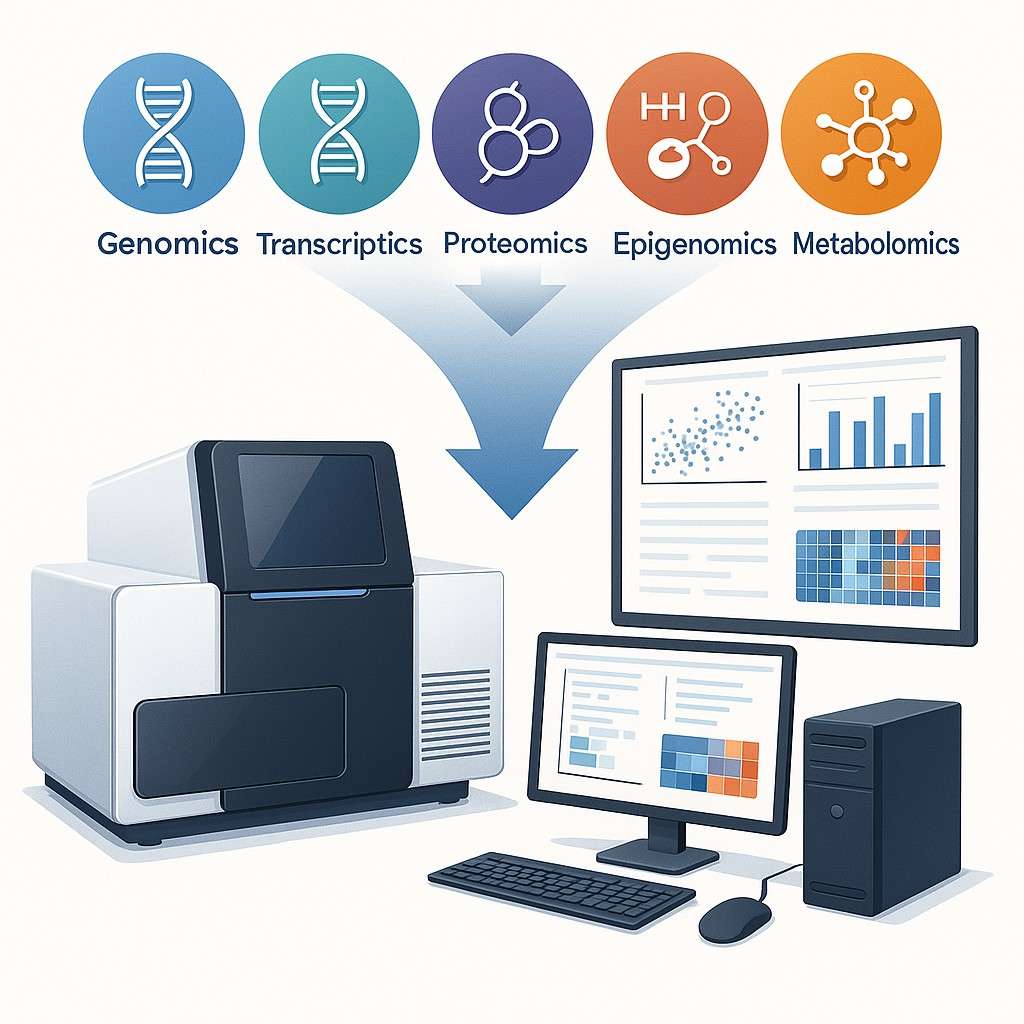
At N2 Jenomics Lab Pvt. Ltd. , we empower your research with integrated multi-omics analysis, combining genomics, transcriptomics, proteomics, epigenomics, and metabolomics. Our multi-omics data solutions unravel complex molecular interactions and biological mechanisms with unmatched precision. Whether you're studying disease pathways, breeding targets, or environmental responses, our customized multi-omics integration and bioinformatics support accelerate your discovery journey.
Tailored workflows, validated pipelines, expert support—designed for high-impact science.
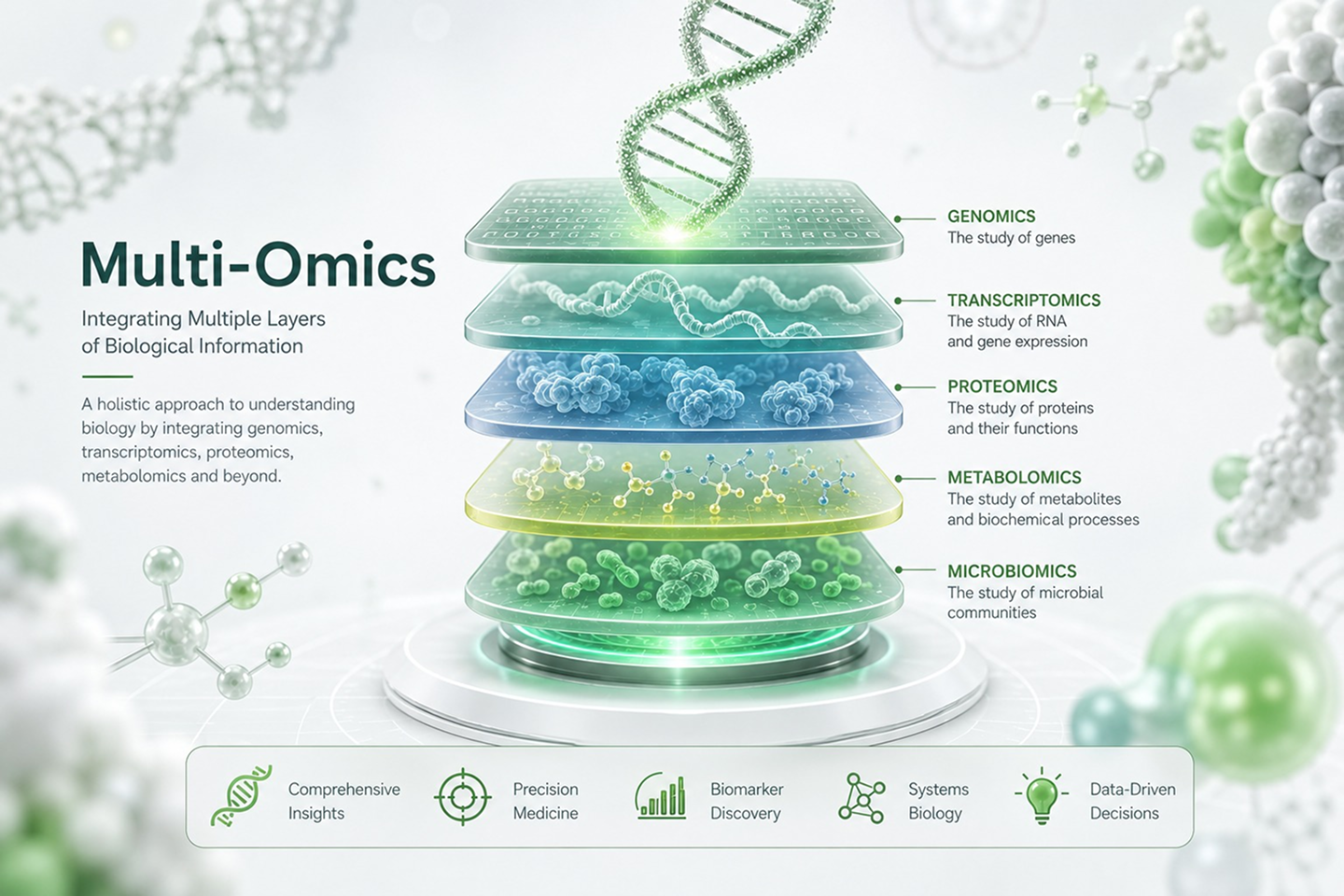
Multi-omics analysis is a systems biology approach that integrates multiple molecular layers—genomics, transcriptomics, epigenomics, proteomics, and metabolomics—to generate a comprehensive view of biological mechanisms. Unlike single-omics studies that focus on one molecular domain, multi-omics captures cross-talk between genes, transcripts, proteins, and metabolites, enabling more accurate modeling of biological function, disease progression, and therapeutic response.
Whether you're uncovering regulatory circuits in cancer, optimizing crop traits, or profiling host–microbe interactions, multi-omics data analysis delivers a deeper, more reproducible understanding of the system.
Key Advantages of Multi-Omics Approaches:
Decodes complex interactions beyond the limits of single-omics
Cross-validates results across biological layers for improved accuracy
Enables discovery of multi-modal biomarkers and pathway signatures
Offers high sensitivity to detect low-abundance but critical targets
Supports both hypothesis-driven and discovery-based research
Why Multi-Omics Is Transforming Modern Bioscience
Integrating diverse omics data has become essential in both academic and industrial settings. From biomedical discovery to agricultural genomics and environmental science, multi-omics integration enables more precise research conclusions, accelerating innovation and reducing development risk.
Biomedical Research & Drug Development
Identify disease-specific drivers across genomic, transcriptomic, and epigenomic layers
Predict therapeutic targets and resistance mechanisms
Track treatment response and immune modulation using longitudinal omics
Plant, Microbiome & Environmental Studies
Improve stress tolerance and yield traits through omics-guided breeding
Uncover soil–plant–microbiome interactions using amplicon + metabolomics integration
Monitor environmental pollutants through multi-level biomolecular profiling
Multi-Omics Integration Strategies
Transcriptomics + Metabolomics
This dual-layer strategy links gene expression to downstream metabolic changes, offering both causative and phenotypic perspectives. Ideal for:
Growth & development studies
Immune response profiling
Stress resistance research
Biomarker discovery in chronic disease
Transcriptomics + Proteomics
Explore the full cascade of gene regulation by analyzing mRNA and protein expression together. This approach captures both transcriptional activity and post-transcriptional modulation, uncovering hidden regulatory events.
Reveal translation bottlenecks and compensatory pathways
Compare gene-to-protein correlations under stress or disease
Improve biomarker validation with protein-level evidence
Epigenomics + Transcriptomics + Genomics
This tri-omics approach offers a panoramic view of gene regulation—connecting sequence variants, epigenetic modifications (like DNA methylation and histone marks), and downstream gene expression.
Map regulatory regions controlling gene activation
Characterize cancer subtypes and developmental stages
Identify disease-linked variants in non-coding regions
Popular Tools:
WGBS, RRBS, ChIP-seq, RNA-seq, and whole-genome sequencing (WGS)
Amplicon Sequencing + Metabolomics
Specially designed for microbiome studies, this combination uncovers how microbial populations influence host or environmental metabolism.
Study gut microbiome modulation of host immune pathways
Identify microbial metabolites correlated with disease states
Example Use Case:
Linking 16S rRNA sequencing of gut flora with metabolomic shifts in short-chain fatty acid production.
Each project is supported by a dedicated bioinformatics team that will help you:
Select optimal omics combinations
Design a study that supports both discovery and validation
Integrate public data (e.g., TCGA, GEO) to enhance interpretability
Customized Bioinformatics & Data Analysis
From Raw Multi-Omics Data to Biological Insight
At N2 Jenomics Lab Pvt. Ltd. , we recognize that sequencing is only the first step. The true value of multi-omics analysis lies in the data interpretation—translating terabytes of raw information into actionable biological meaning. That's where our customized bioinformatics solutions come in.
Our expert team—comprising molecular biologists, statisticians, and data scientists—works side-by-side with you to tailor every analytical step, ensuring your multi-omics data analysis aligns with your biological hypothesis, study design, and publication goals.
Why Personalized Bioinformatics Matters
Standardized workflows may overlook subtle regulatory events or system-wide interactions. N2 Jenomics Lab Pvt. Ltd. offers fully customized pipelines to:
Please consult with our technical team for species-specific requirements or custom formats.
Multi-Omics Service FAQs
Q1: What omics types can be integrated in one project?
We support flexible combinations of genomics, transcriptomics, epigenomics, proteomics, and metabolomics. You can choose 2–5 layers based on your biological question and project goals.
Q2: Can I provide my own sequencing data for integration?
Yes. We accept external datasets in standard formats and can integrate them with newly generated omics data or public databases (e.g., TCGA, GEO) as part of a customized analysis plan.
Q3: What kinds of research questions can multi-omics help answer?
Multi-omics analysis is ideal for uncovering regulatory mechanisms, identifying biomarkers, profiling disease subtypes, understanding stress or immune responses, and mapping host–microbiome interactions.
Q4: What deliverables will I receive?
You will receive a full report with annotated data tables, interactive plots, pathway diagrams, network maps, and publication-ready visual figures. Both raw and processed data files are included.
Q5: How do you ensure data quality and reproducibility?
We apply stringent quality control at every stage—sample assessment, sequencing, data preprocessing, and statistical modeling. Cross-validation across omics layers improves reliability and reduces noise.
Q6: Can you assist with manuscript preparation or downstream analysis?
Yes. We offer optional support for manuscript writing, figure formatting, and peer review responses. We also provide extended data mining and interpretation services upon request.
Q7: How should I get started with a multi-omics project?
Simply contact us with your project goals and available sample types. Our scientific team will help design the optimal omics strategy and guide you through sample submission and workflow planning.
Address:Registered Office: 150, Patparganj Industrial Area, New Delhi – 110092, India
Operational Address:National Institute of Plant Genome Research (BRIC - NGGF)
Lab No. 206 and 207, Aruna Asaf Ali Marg, P.O. Box No. 10531,
New Delhi – 110067, India