Gene Panel Sequencing Service Home  > Gene Panel Sequencing Service

Gene Panel Seq Case Studies

Identification of mutation gene prognostic biomarker in multiple myeloma through gene panel exome sequencing and transcriptome analysis in Chinese population

Journal: Computers in Biology and Medicine

Impact factor: 7.7

Published: September 2023

Background

Multiple myeloma (MM) is a prevalent blood cancer that primarily affects older adults and is less common in children in China. It shows regional variations in incidence and has a five-year survival rate below 40%. Effective treatments are currently lacking. NGS is proving valuable for understanding MM by identifying critical mutations. This study employs exome sequencing in 50 Chinese MM patients to uncover significant genetic changes and potential new targets for treatment.

Materials & Methods

Sample Preparation

  • Clinical samples
  • Bone marrow specimens

Sequencing

  • Targeted gene panel
  • Whole-exome sequencing
  • Illumina MiSeq

Data Analysis

  • DEG identification
  • GO and KEGG enrichment analysis
  • Survival analysis
  • Statistical analysis

Results

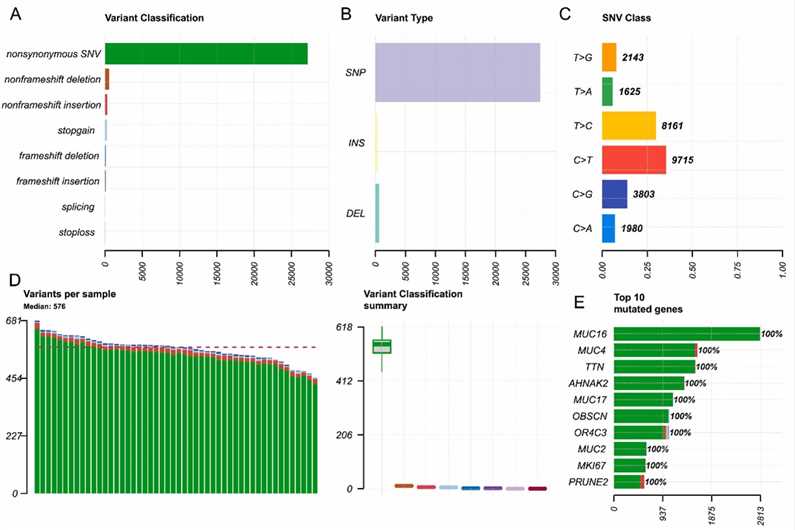
Exome sequencing of 50 MM patients targeting 400 genes revealed various mutation types, with nonsynonymous single nucleotide variants (SNVs) being predominant. The most common mutations were C > T substitutions, and each sample had a median of 576 mutations. The top ten frequently mutated genes were MUC16, MUC4, TTN, AHNAK2, MUC17, OBSCN, OR4C3, MUC2, MKI67, and PRUNE2, all showing 100% mutation frequency.

Fig. 1. Summary of mutation profiles for 50 multiple myeloma patients. (Xie et al., 2023)

Fig. 1. Overview of the mutation status of the 50 patients with MM.

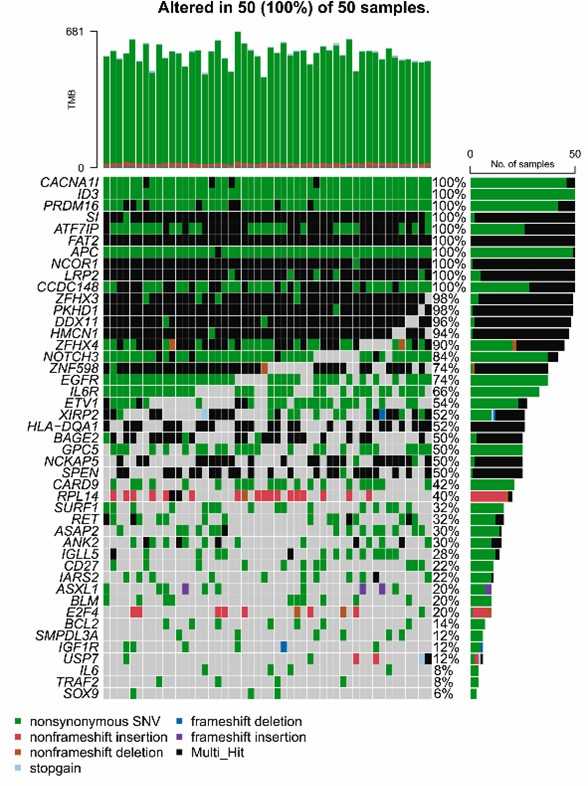
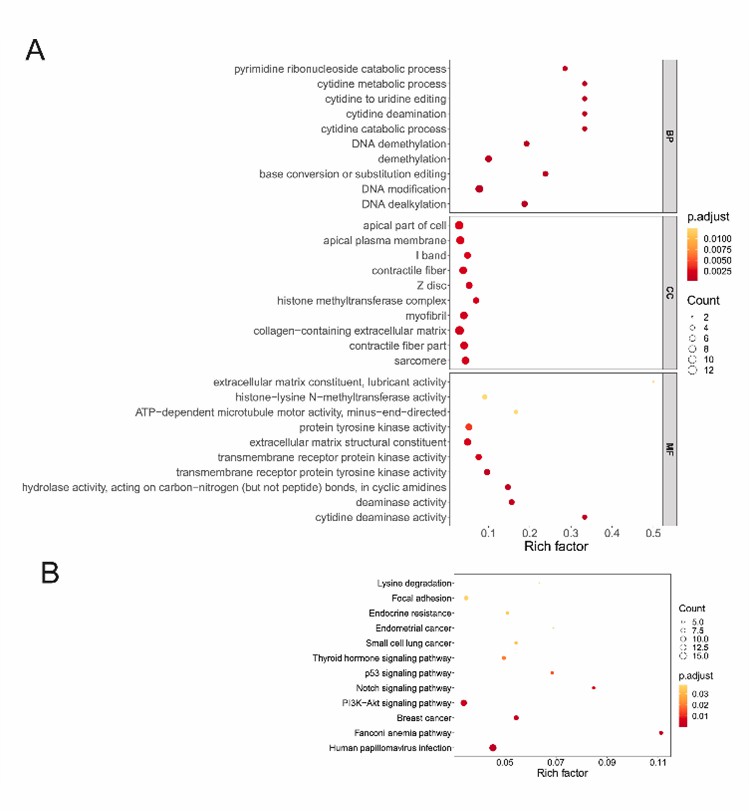
The study analyzed the mutational landscape of 50 MM patients using a 400-gene panel. It identified mutations in 337 genes, with 48 genes showing 100% mutation frequency and 31 more than 90%. Key mutated genes include CACNA1I, ID3, and EGFR. Functional enrichment revealed that mutant genes were associated with DNA modification, extracellular matrix functions, and several key signaling pathways, including PI3K-Akt and Notch.

Fig. 2. Visualization of the 45 frequently mutated genes among the 50 patients using OncoPrinter. (Xie et al., 2023)

Fig. 2. The common 45 mutated genes of 50 patients were visualized by OncoPrinter.

Fig. 3. Functional enrichment analysis of mutated genes in multiple myeloma. (Xie et al., 2023)

Fig. 3. Function enrichment analysis of mutant genes in MM.

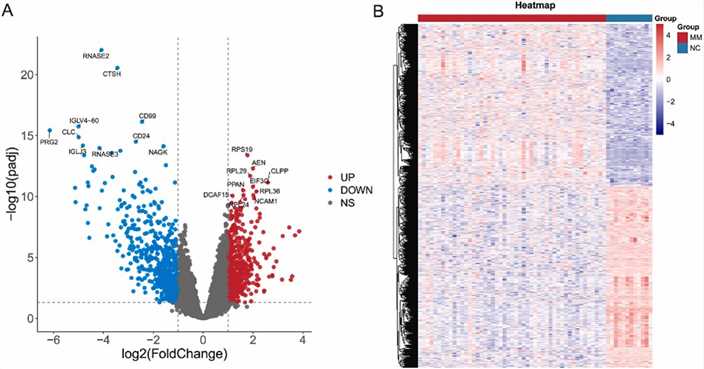
Gene expression analysis from the GSE6477 dataset identified 1247 differentially expressed genes (DEGs), with 660 downregulated and 587 upregulated. Notable DEGs include RNASE2 and RPS19. Analysis of common genes between mutant genes and DEGs highlighted 33 genes, including ID3 and MYC, which were enriched in pathways related to cell proliferation, myeloid differentiation, and viral carcinogenesis.

Fig. 4. Detection of differentially expressed genes (DEGs) in the GSE6477 datasets. (Xie et al., 2023)

Fig. 4. Identification of DEGs in GSE6477 datasets.

Conclusion

Multiple myeloma (MM) in China shows a low survival rate. Sequencing of 50 patients found mutations in 337 genes, notably MUC16, MUC4, and TTN. Key mutations in BCL6 and BIRC3 are linked to worse outcomes and immune changes, offering new treatment targets but needing further research.

Reference

  1. Xie C, Zhong L, Luo J, et al. Identification of mutation gene prognostic biomarker in multiple myeloma through gene panel exome sequencing and transcriptome analysis in Chinese population. Computers in Biology and Medicine, 2023, 163: 107224.

Demo Results

Partial results are shown below:

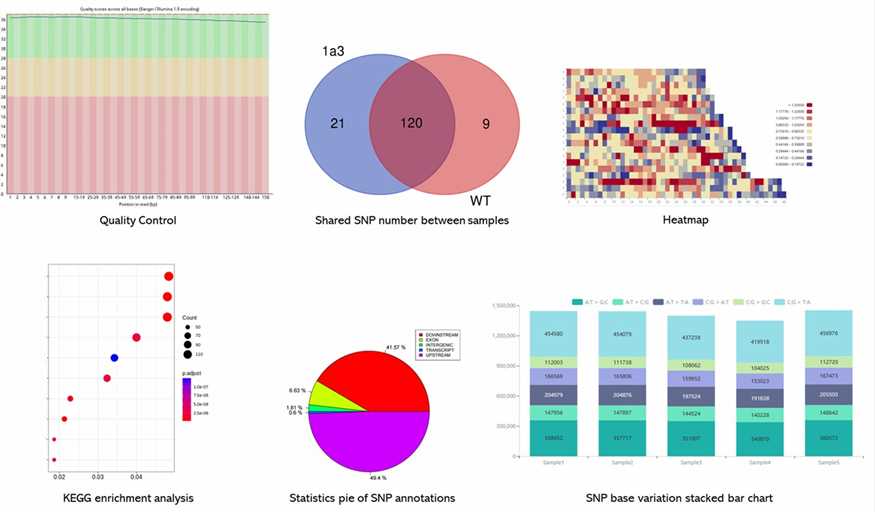
The Gene Panel Sequencing Results Display Figure.

Gene Panel Seq FAQs

1. When selecting genetic testing options, what do "small panel" and "large panel" mean?

In the context of NGS, "small panel" and "large panel" refer to different scopes based on the number of genes being analyzed.

Small Panel: This typically includes a set of genes ranging from a dozen to a few dozen. These panels generally focus on key driver genes associated with approved or clinically relevant targeted therapies for specific cancer types. They may also include a selection of tumor suppressor genes that have garnered significant research interest.

Large Panel: These panels encompass hundreds to thousands of genes. They not only cover driver genes pertinent to targeted therapies but also incorporate a broad spectrum of genes associated with cancer, as allowed by current research and technological capabilities. The results from large panels extend beyond the identification of targeted therapies for specific cancers to include cross-cancer drug options, immunotherapy-related markers such as Tumor Mutational Burden (TMB) and Microsatellite Instability (MSI), and potentially hereditary cancer genes.

2. How does Gene Panel Sequencing differ from Whole-Genome Sequencing?

Gene Panel Sequencing focuses on predetermined sets of genes or genomic regions, delivering high-resolution data for those targeted areas. In contrast, Whole-Genome Sequencing entails the examination of the entire genome, encompassing both coding and non-coding regions. This approach offers a comprehensive landscape of all genetic variations within an organism.

3. How do I choose the right gene panel for my research?

Consider the specific genes or pathways of interest, the research objectives, and any prior knowledge of the genetic factors involved. Consult with a genomic specialist or review available panels to ensure alignment with your research goals.

Gene Panel Seq FAQs

1. When selecting genetic testing options, what do "small panel" and "large panel" mean?

In the context of NGS, "small panel" and "large panel" refer to different scopes based on the number of genes being analyzed.

Small Panel: This typically includes a set of genes ranging from a dozen to a few dozen. These panels generally focus on key driver genes associated with approved or clinically relevant targeted therapies for specific cancer types. They may also include a selection of tumor suppressor genes that have garnered significant research interest.

Large Panel: These panels encompass hundreds to thousands of genes. They not only cover driver genes pertinent to targeted therapies but also incorporate a broad spectrum of genes associated with cancer, as allowed by current research and technological capabilities. The results from large panels extend beyond the identification of targeted therapies for specific cancers to include cross-cancer drug options, immunotherapy-related markers such as Tumor Mutational Burden (TMB) and Microsatellite Instability (MSI), and potentially hereditary cancer genes.

2. How does Gene Panel Sequencing differ from Whole-Genome Sequencing?

Gene Panel Sequencing focuses on predetermined sets of genes or genomic regions, delivering high-resolution data for those targeted areas. In contrast, Whole-Genome Sequencing entails the examination of the entire genome, encompassing both coding and non-coding regions. This approach offers a comprehensive landscape of all genetic variations within an organism.

3. How do I choose the right gene panel for my research?

Consider the specific genes or pathways of interest, the research objectives, and any prior knowledge of the genetic factors involved. Consult with a genomic specialist or review available panels to ensure alignment with your research goals.

Address: Registered Office: 150, Patparganj Industrial Area, New Delhi – 110092, India
Email: info@n2jenomicslab.com
Phone: +91-8287121443
Operational Address: National Institute of Plant Genome Research (BRIC - NGGF) Lab No. 206 and 207, Aruna Asaf Ali Marg, P.O. Box No. 10531, New Delhi – 110067, India
Follow Us:
2,210 Total Visitors
Copyright © 2026 | All rights reserved N2 Jenomics | Developed by Him Soft Solution